Thursday, April 28, 2011

Beijing Spring Break

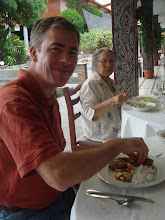
Glen and I went to Beijing for spring break this year. It was perhaps a little foolish to go so far for only a bit over a week, but United Airlines has a non-stop Washington to Beijing flight, and I was able to book with miles, which made it seem reasonable. The jet-lag is on the other side of the ledger, but one doesn't really know about that until after the trip.

Neither of us had been to mainland China before. I have been through Hong Kong a couple of times, but that is really different. I was impressed, though, with how relatively easy it is for a Westerner to visit Beijing. Clearly they are set up for us. It was very easy to get around in the excellent subway, and many signs and other resources are provided in English.

I was a little derelict as far as food and restaurant research goes, so we pretty much made it up as we went along. There were some hits and some misses. One of our favorite dinners was at a place in the Gui Jie (Ghost Street), where they do the Sichuan hot pot. The idea is that you have a bubbling pot of broth in which you cook your dinner yourself, using the meats, vegetables, and noodles that are available. This restaurant offers the option of having both the super-spicy broth and a chicken broth in the same pot, separated by a divider. Wanting to hedge our bets, we opted for this, and both were really tasty, as were the tahini and garlic-oil dipping sauces.

After visiting Prince Gong's mansion one morning, we stopped for lunch at Chengdu, a restaurant in Lotus Lane that had the most beautifully presented food. We had a salad made of chicken braised in xiaoxing wine, served with pomegranate seeds on a bed of crushed ice, some pork spare ribs that were glazed in a plum-lemon sauce, and lotus root cooked with a variety of mushrooms. Everything was gorgeous, and the restaurant offered nice views overlooking Houhai Lake, not far from the Forbidden City. This was clearly a hopping part of town, with lots of bars, restaurants, and clubs, even reggae!

One thing that really struck me was how much the Beijingers seemed to enjoy their food. In just about every restaurant we went, every table was covered with more dishes than the diners could hope to finish, though they made a valiant attempt. The era of state-run restaurants must have been miserable! After struggling with the menu at one restaurant, we told the waitress just to bring all of the dishes that the neighboring table had ordered. It was delicious, but there was no way we could finish it all.

One thing we didn't really experience much of was street food. It seemed that there was never anything that looked very good when we were hungry. I did have the candied hawthorne apples that you see everywhere a couple of times, and Glen braved a kefir-like drink in a little brown ceramic crock that just about every food stall seemed to offer, but neither of us had deep-fried scorpions or pork intestines or any of the other things that you see. I guess that will be on the next trip.

The most interesting food experience we had actually involved a home-cooked meal. While shopping, we popped into a little shop that was full of Yixing teapots, which are made of a special porous clay. After drinking much tea, and receiving a demonstration of the Chinese tea ceremony, and the purchase of two teapots, the proprietor invited us to share the lunch that her uncle had prepared. I'm not entirely sure what we ate, but it was a fun experience, and I wasn't really all that enthusiastic about trying the donkey meat restaurant that was around the corner.

Saturday, April 09, 2011

Seared Scallops with Cauliflower Puree and Quinoa Pilaf

I wish that I could have spent some time in the garden today, but the weather did not cooperate. It rained last night and this morning, so I think it would have been too wet. Instead, I did laundry, cooked some, and lamented that the Congress got its act together and agreed on a budget, which means that I won't get Monday off. I was kind of looking forward to a government shut-down.

I have been wanting to try the cinnamon-raisin bread in Bread Baker's Apprentice, so I went ahead and tackled that project. I just had a couple of toasted slices as my dessert, and it was really delicious. I do need to work on shaping uniform loaves, though, even if it still tastes wickedly good.

For dinner I made the menu referenced in the title to this post. It seem like I have been seeing lots of seared scallops and cauliflower puree on restaurant menus, so I decided to try my own version. I roasted half of a fennel bulb in olive oil with a few cloves of garlic, letting them caramelize nicely. While that was underway, I steamed about half of a head of cauliflower (this was just for Glen and me, so I decided to save half of the head for something else) until it was tender. I also toasted some fennel seeds, grains of paradise (peppercorns would be a fine substitute), and coriander seeds. Once toasted, I ground all of the spices in a spice grinder and used them to season the cauliflower and fennel, which I pureed in the food processor with some butter and a dash of cream. I seasoned the puree with salt and added a bit of lemon juice, just to brighten the flavor.

We had the puree with some seared sea scallops, and I also made a quinoa pilaf with carrots, asparagus, and red onion, all dressed with a vinaigrette I made from olive oil, a fig-infused white balsamic vinegar, and a touch of Dijon mustard. The only downside of the whole meal was the rather bland appearance of the scallops and puree; I think I needed some parsley. A little garnish can go a long way. Fortunately, the taste was anything but bland.


Monday, April 04, 2011

Polenta with Zucchini Carpaccio and Roasted Peppers and Onions

The dinner in the adjacent picture was supposed to be pork chops, but I ended up not making it to Whole Foods after work. As a result, we were virtuous and ate some of the vegetables in the bin.

Polenta with Zucchini Carpaccio and Roasted Peppers and Onions

Halve and core two red peppers, and cut into fat strips. Similarly slice a red onion, and place with the peppers in a roasting pan or, even better, a cast iron skillet. Drizzle with ample olive oil, and add salt and pepper. Roast in a 375 degree oven for about 30 minutes or so, until vegetables are soft and starting to brown a bit. Meanwhile, thinly slice one medium zucchini lengthwise. Spread the slices in a single layer on a rimmed baking sheet, and brush both sides with olive oil. Lightly salt and pepper. Put zucchini in the oven when the peppers still have about ten minutes to go. The zucchini are done when they are nice and tender.

While the vegetables finish cooking, julienne a good handful of basil leaves, and mince one clove of garlic. After taking the peppers out of the oven, stir in the garlic, and pop back into the oven for a minute or so, just to take the bite off. After taking them out of the over, toss the peppers with the basil, and drizzle with some balsamic vinegar.

Meanwhile, prepare soft polenta. (I typically use quick-cooking polenta, which is done in just a couple of minutes.) If available, stir some mascarpone cheese into the polenta.

When ready to serve, put soft polenta into bowls, drape zucchini slices over, and top with roasted peppers and onions. Add a grating of parmesan, if desired. Some toasted pine nuts would also be good.

We did end up having the pork chops last night, coated in powdered porcini mushrooms, pan-seared and then roasted for 15 minutes. They were delicious with pureed garbanzo beans, which were scented with cumin and Spanish smoked paprika, and oven roasted asparagus with a squeeze of Meyer lemon juice. But that menu was probably a little less virtuous.

Monday, March 21, 2011

It has been a long while since I have posted, but that doesn't mean that I haven't been cooking or gardening. Short ribs, lamb shoulder chops, various uses of quinoa, grilled asparagus, a refrigerator-emptying soup, and all sorts of other things have come and gone, and I haven't written a word about them. And then there is all of the activity in the garden. Potatoes, onions, and peas planted, grasses cut back, and all the rest. I think that this is my busiest time of year. I have even found myself wishing for a Federal government shutdown, just so that I could have a week or so to make some progress on my "to do" list. There are several painting projects, for example. Indoor and outdoor, it seems like we just have a boatload of painting to do. It reminds me of a story I read once about the family firm that is in charge of painting the Bay Bridge in San Francisco Bay. They start at one end and work their way across the bay. By the time they finish, it is time to start back in on the other end.

So I was off today, even though it was a Monday, because I had to work on Friday, which was my normal day off. I only finished about half of the things on my list, but I did accomplish a few kitchen goals. I made three loaves of pain de campagne, which is the variety I have been struggling to perfect. I think that I did the best job with the dough that I have done so far, but shaping the loaves is still a bit of a challenge. Hopefully practice will eventually make perfect. Today I did one boule and two batards. We had part of the boule for dinner, and it was undeniably tasty. Perhaps next time I will just do three boules, and really try to get them right.

Along with the bread we had an asparagus and ham tart. I essentially adpated a recipe from the Greens restaurant cookbook. They have a basic recipe for tart dough for a 9 inch tart. Since I have a 10 inch pan, and since I have always found their recipe to be a little skimpy, I just increased it by a factor of one third, which was about right. Their dough uses one cup of regular flour, which I supplemented with a third of a cup of whole wheat flour. I thought that really worked. For the filling I sauteed a giant sliced leek in olive oil, blanched some asparagus for 3 minutes, diced some ham, and grated about 2/3 of a cup of Gruyere cheese. The custard included 3 eggs, 1 1/2 cups of light cream, some salt and white pepper, and some fresh thyme. After prebaking the crust, I layered in the cheese first, then the leek, then the ham and asparagus before pouring in the custard. It spend about 45 minutes in a 375 degree oven.

I opened a 2009 Linden Rose wine to have with the tart, and it was delicious. I want to get out there to buy another case of wine, but I wanted to try everything we bought on the last trip so that I would know what we wanted. In truth, comparable French and Spanish wines are available for quite a bit less money, but I still like the idea of drinking locally.

Tuesday, February 08, 2011

Winter Into Spring


It was 38 degrees outside when I left for work this morning at 7:25 am, and 31 degrees when I left the office at 5:30 pm.  It felt even colder, too, because of the strong wind.  Over the weekend it seemed like spring might be just around the corner. The sun shone warm, and I even saw a few crocuses starting to poke their way out. Just the hint of the change of seasons motivated me to order seeds, potatoes, onions plants, and a few other odds and ends. I want to be ready when it is time to garden. But then the cold blew back into town. It didn't get me down, though, because the days are longer, and I know that a change is in the air.

It won't be long before I want to cook differently, but comfort food still feels right. I made some lamb shanks over the weekend, seared and then braised in red wine with root vegetables, and perfumed by bay leaves, herbes de Provence, some anchovy and tomato pastes, and orange peel. I had the last one for lunch today, with the rich gravy, and it was pretty delicious. Sure beats Quiznos. I think that I will try those again soon, adding some black olives towards the end of the braise. We had the lamb with polenta and some fresh bread that I had made, a pain de campagne from Bread Baker's Apprentice. The bread was fine, but I would like to make the same recipe again next weekend. I think that there might be room for improvement. I really, really want to make Peter Reinhart's cinnamon-raisin bread, though, and I might do it, since we will have some house guests to feed.

Tonight I made a risotto that incorporated some parsnips that I didn't need for the lamb. I diced them small and sauteed them with two sliced leeks in butter and olive oil along with a bit of rosemary, before adding the arborio rice. I also soaked some porcini mushrooms, and I added the soaking liquid to the risotto, along with white wine and chicken stock. I then chopped the mushrooms and added them towards the end, and I finished with Parmesan cheese and a couple of tablespoons of cream, along with some salt and pepper. We had the risotto with some sauteed spinach, which made for a perfectly satisfying weeknight dinner.

Saturday, January 22, 2011

Pane Siciliano


It is very cold in DC this weekend, so baking bread was definitely the appropriate thing to do.  I decided to try the Pane Siciliano, which is a semolina bread, from The Bread Baker's Apprentice.  I have always liked using some semolina flour in pizza dough, so I had a good feeling about this recipe.  Technically, this is a three day bread, but I am cheating a little bit.  I made the starter last night, let it ferment overnight, and then got up early, made the dough, let it rise, and formed the three loaves.  Peter Reinhart, the author of BBA, is a big advocate of letting bread dough spend a full overnight in the refrigerator, to allow time for the biology to fully play out and develop the maximum flavor.  In this case, I decided to experiment.  I let one loaf do its final rise immediately after shaping, and then I baked it.  The other two loaves are still in the refrigerator, but I think that I will take them out after about 8 hours, let them finish their rise, and then bake them.  Then the next time I make this bread I will let the dough have its full overnight rest in the refrigerator.  I did taste the immediate-rise bread, and it was fine, though nothing particularly spectacular.

One thing that appeals to me about this bread is the S-shape.  This is created by forming the dough into a 24-inch baguette, and then rolling each end in opposite directions until the bread is formed into a compact package.  I was a little worried about the aesthetics of my loaves, but the dough was pretty easy to work with.

Since we have the fresh bread, I am just going to make some simple braised chicken thighs with vegetables.  Something broth-y seems like the right accompaniment for the bread.  Overall this hasn't been a very remarkable food week, though I did do something earlier in the week that I like doing in the winter.  It involves halving and steaming Brussels sprouts, and then tossing them into a pan of caramelized onions and sliced kielbasa sausage.  I added some whole grain Dijon mustard directly to the pan, and then served with some mashed potatoes, which I had dressed up with sour cream instead of butter.  Very delicious!

Monday, January 17, 2011

January Droops

T.S. Eliot notwithstanding, I think that January is the cruelest month.  No more anticipation of the holidays, just the cleanup and credit card statements.  The coldest and snowiest months staring us in the face.  The inevitable colds and flus.  No herbs growing in the backyard.  And the darkness.  I wonder how anyone avoids seasonal affective disorder (aka SAD).

I tried to snap myself out of the droops by baking some bread.  Now, I have never been a gifted baker, but I received The Bread Baker's Apprentice as a Christmas present, and that has inspired me to work on bread this year.  I started today with a very simple dough, for a bread that Peter Reinhart, the author, calls pain Ć  l'ancienne.  He thinks that it makes the best baguettes in Paris.  Who am I to argue?  I made four mini-baguettes, set aside two balls of dough for pizza tomorrow, and baked and froze two ciabatta-style loaves for later this week.  I'm sure my baguettes are not the best in Washington, but they had a very nice crust, and they made excellent sandwiches with some ham, aged GruyĆØre, and mustard.  It will be a nice project for 2011 to learn how to make some decent breads.

Sunday, November 28, 2010

Thanksgiving Weekend, 2010

This year my parents visited for Thanksgiving, reprising a tradition that they kept up for six or seven years when we lived in Atlanta.  It has been harder for them to travel since then, so they have only visited a couple of times since we moved to D.C., but they decided to make the trip this year.  I think that we all had a wonderful time.

My Dad has some dietary restrictions, so I put together a Thanksgiving menu that had healthier versions of some of the standards.  I spatchcocked the turkey, which involves taking out the backbone and roasting it flat.  This method obviously eliminates the option of stuffing, so we had dressing cooked outside the bird.  I did a wild rice dressing that included pecans, mushrooms, and Madeira, but no butter, in deference to Dad.  I probably should have added some dried fruit, though.  In addition to mashed potatoes (again no butter) and gravy (which Dad didn't eat) and cranberries poached in red wine with spices, we had butternut squash and leeks baked in parchment paper packets and green beans in a Meyer lemon and olive oil vinaigrette.  To finish it off, my Mom made a healthy pumpkin pie in an oil-based crust and I made an apple pie in a decadent buttery crust.  All in all, it was a pretty good meal, and we had ample leftovers.

Or even too many leftovers.  I'm getting a little tired of turkey, so I jumped at the chance yesterday to make something else for dinner.  We met a friend of ours out in Middleburg, Virginia, where we had lunch and I went meat shopping at the Home Farm store, which sells local heritage meats.  I bought some delicious (humanely raised) veal rib chops and a couple of pounds of chuck roast.

We had the veal chops last night, and I am marinating the chuck in red wine, along with some herbs and aromatic vegetables, so that I can cook it tomorrow in the slow cooker, while I'm at work.  I did the chops very simply, just searing them in a cast iron skillet and then roasting them for 15 minutes in a 375 degree oven.  That was just about right.  We also had some sauteed mushrooms and shallots, which I did in the skillet while the meat rested.  I deglazed the sauteed mushrooms with some cognac, added a little extra turkey stock I still had from the big day, and finished it with a little cream to make a sauce for the meat and the mashed potatoes.

In addition to visiting Middleburg, we also stopped up at the Linden Vineyards, in the Blue Ridge Mountains.  We tasted some very pleasant wines and split up a case purchase with our friend, so that we could enjoy the benefits of their "Case Club," one of which is access to a delightful tasting porch.  Judging from the reviews I read online, some people react pretty negatively to Linden's efforts to limit access, by, for example, requiring Case Club membership for some things.  From my perspective, the experience would probably be destroyed if access were not metered in some way, and they are simply doing it by allocating space to their best customers.  It seems like a reasonable way to operate a business.  Be that as it may, we have access for a year now, so hopefully we will make it up again.

Wednesday, November 17, 2010

Making Dinner at the End of the Week

My regular practice is to do the grocery shopping at Whole Foods once per week, with a supplemental trip to Trader Joe's or Costco or a conventional supermarket as needed, but usually no more than once per month.  With that schedule, putting dinner together towards the end of the week can be a challenge, unless I cop out and tell Glen that we're going out, or we are in gardening season so I have a ready supply of fresh vegetables.  This past weekend I did the marketing on Saturday, so I suppose that today (Wednesday) qualifies as "towards the end of the week."

Sitting in a conference room at work this morning, waiting for colleagues to show up for a telephone interview we had scheduled, I mentally reviewed the list of what was left in the vegetable bin.  Turnips.  Mushrooms.  Some spinach.  One red onion in the pantry.  Maybe do something Asian and make some sushi rice?  Figure out a way to incorporate a poached egg?  But what about those gnocchi that had been hanging around for a while?  Somehow that appealed more.

So, we ended up having a spinach and roasted red onion salad, along with gnocchi with turnips, mushrooms, and brown butter.  Here's what I did.  After peeling and halving the onion lengthwise, I cut it into wedges and tossed it with olive oil and some salt and pepper before putting it into the trusty little convection oven at 375 degrees.  It took about 35 minutes for the onion to roast, and then I tossed it with some very good balsamic vinegar.  I added the onions to the spinach, which I also dressed with some balsamic vinaigrette and sprinkled with some salt and a grind of pepper.

For the gnocchi, I quartered a fair number (probably about 10 oz.) of cremini mushrooms, and then I peeled four small turnips and squared them off, so that I could dice them into little cubes.  While sauteeing them in some olive oil, I minced some garlic, which I added to the turnips and mushrooms when they were pretty far along, and I browned about 3 tablespoons of butter.  Finally, I cooked the gnocchi in a pot of boiling, salted water.  Once they were done, I added them to the turnips and mushrooms, along with the brown butter, and tossed the whole mess together.  Of course it made sense to garnish with some good Reggiano-Parmigiano cheese after plating the gnocchi up with the salad.  It would have been nice to add some sage to the gnocchi, but I'll try that next time.

Monday, November 15, 2010

Pumpkin Lentil Stew

I am not ashamed to admit that I occasionally like to use a slow cooker.  I received mine as a gift some years ago, and, despite an initial 1970s macrame-avocado-green-cheese-fondue flashback, I have used it more than I thought I would.  Especially in the colder months, when something stew-like is what appeals.  It certainly did on Sunday, when we were running around all afternoon with a friend who was visiting.  So, I decided to make a second pot of the pumpkin-lentil stew that I had put together a few weeks ago.  Here is what I did.

Ingredients:

2 T olive oil
8 oz. hot Italian sausage, casings removed
1 large onion, chopped
2 ribs celery, diced
3 medium carrots, peeled and diced
3 cloves garlic, minced
1 bay leaf
2 black cardamom pods
some herbes de Provence
1 small sugar pumpkin, seeds removed, peeled and diced
1 bunch kale, ribs removed and chopped
1 can diced tomatoes, with their juices
1 1/4 cups French lentils, rinsed
1 quart low-sodium chicken broth
salt and pepper

Heat olive oil in skillet, and add sausage.  Saute, breaking up the sausage with the back of your spoon.  When it is browned add onion, celery, carrots, garlic, whole cardamom pods, and herbs.  Saute until vegetables start to caramelize.  Put in slow cooker, and add pumpkin, kale, tomatoes and lentils.  Stir to mix.  Add chicken broth, and some salt and pepper.  Cook until vegetables and lentils are tender.  (Approximately 5 hours on the "high" setting seemed about right, but other cookers might vary.)  Correct seasonings and serve.  Add a dash of sherry vinegar or red wine vinegar, if desired.

We had the stew with a beet and spinach salad and some homemade biscuits.

Thursday, October 21, 2010

Autumn Farro Pilaf

Even though I like meat too much to consider ever becoming a vegetarian, I do my best to plan at least a couple of meatless meals every week.  That can be a little more challenging than simply recycling the same formula of meat-starch-veg night after night, but ultimately this commitment forces me to be more creative, I think.  In part that is because, even without animal protein, I still crave the same rich kinds of flavor that roasting or browning meat imparts to a dish.

Last night I created that same experience in a farro pilaf that we had with a roasted beet and spinach salad.  Here's what I did.

Ingredients:
1 cup farro
8 oz. mushrooms (cremini or an assortment with some wild), quartered
8 oz. Brussels sprouts, halved
1 onion, cut in strips
olive oil
salt and pepper
crumbled goat cheese

Bring 5 cups of salted water to a boil.  Add the farro, cover, and simmer for 25 minutes or so, until tender.  Drain.  Meanwhile, toss the mushrooms, Brussels sprouts, and onion with olive oil, season with salt and pepper, and roast in a 400 degree oven for around 25 minutes, until they are starting to brown.  Toss the vegetables and the warm farro together, dress with a little additional olive oil, and correct seasoning.  Garnish with goat cheese.

I also made a pumpkin, kale, and lentil stew the other day in the slow cooker; I'll post that recipe when I have a chance.

Tuesday, October 05, 2010

Using Every Bit of Flavor


Glen and I recently had dinner at Ardeo, a restaurant in Cleveland Park, which we had never tried before. I enjoyed my dinner quite a lot, especially the celery root and winter squash hash that they served along with roasted salmon, olive puree, and pine nut foam. I just happened to have a celery root in the refrigerator that I hadn't used the week before, as well as half of a butternut squash, so I decided to see if I could make a reasonable facsimile.

I also wanted to try a recipe from the November issue of Fine Cooking, for a turkey breast "porchetta." As the name suggests, this dish is typically made from a small pig, but in this version a deboned turkey breast is marinated with a spice rub, trussed up, browned in a skillet and then roasted under a canopy of pancetta. This is where the extra flavor comes in. After I browned the turkey in a trusty cast-iron skillet, I realized that I should just make the hash in that pan, to squeeze out every bit of flavor, as well as to save a bit on the dish-washing.

So, I cubed my celery root and squash, diced some onion, and sauteed everything in the skillet with some additional olive oil and a bay leaf. No other herbs or spices were needed, because the pan already contained a fair amount of the spice rub, which included fennel, coriander, sage, rosemary, and garlic. After sauteeing for ten minutes or so, I began to add water in quarter-cup increments, until the vegetables were tender but still held their shape. The end result was not exactly like Ardeo's, but it was still pretty delicious, along with the meat and some mashed potatoes.


Sunday, October 03, 2010

Ramona the Pest

Anyone who lives with a cat knows that it is very difficult to prevent them from doing exactly what they want to do, especially jumping up on countertops. I know that we should more diligently apply the spray bottle method, but I'm not sure it would work on either Rupu or, especially, Ramona, who is very persistent and curious. Why on earth would she want to investigate a bunch of kale? Who knows? It really doesn't matter, because she's going to do it.

I needed the kale for a vegetable casserole called panade. The recipe was in the New York Times Magazine a few weeks ago. It involved layering sauteed leeks, slices of butternut squash, kale, cauliflower, and stale bread in a Dutch oven, and then baking the whole thing with milk and fontina cheese. I added some nutmeg to the recipe; it seemed to need some additional spice. I thought it was a little too wet, so I will need to make some adjustments next time.

Along with the panade, I made an impromptu mushroom-barley soup. I sauteed some onion, carrot, and celery with a bay leaf and some thyme, and then added about twelve ounces of sliced mushrooms, half cremini and half shitake. After they were cooked, I added 2 cups of beef broth I had frozen, about 3 cups of water, 1 tablespoon of soy sauce, and a third of a cup of barley. The soup made a very satisfying starter.

Along with dinner we drank an Austrian red wine, a 2008 Schiefer Kƶnigsberg BlaufrƤnkisch that paired well with the food. It is a fairly light red, but with some nice spiciness that complemented the rustic rood very well.

Saturday, August 21, 2010

Eggplant Avalanche

I think that I have mentioned that I have never had any luck growing eggplant before. Well, that worm has turned. This year we have had oodles of the fruits. The white variety, which reminds me of ostrich eggs, have probably been the most prolific, but the purple ones are coming on strong, and I have harvested a few Chinese eggplant too.

So far we have had them in salads, pastas, a tart, and an Indian stew, but several nights ago I decided to make some eggplant sandwiches for dinner. I sliced the eggplant thick, sprinkled the slices with salt, and let them sweat for fifteen minutes or so while heating my little convection oven up to 400 degrees. After blotting the eggplant slices with a paper towel to absorb the bitter juice that they gave up, I brushed them with olive oil and sprinkled them with salt and pepper before popping them in the oven, where I baked them about 12 minutes or so on each side, until they were brown and soft. I brushed the eggplant slices again with a balsamic vinaigrette after they came out of the oven. While they were cooling a bit, I toasted the bread and sliced some tomatoes and fresh mozzarella. To assemble the sandwich, I stacked the eggplant, some arugula leaves, the mozzarella, the tomatoes (which I sprinkled with salt and pepper), and a few basil leaves on the bottom slice of toasted bread. I spread the top slice of bread with some lemon mayonnaise and added it to the sandwich.

We both pronounced it delicious, but I found myself wondering what it would have been like with some prosciutto...

Saturday, August 07, 2010

Summertime

I have a long-time friend who moved away a couple of years ago, but I always think of her when I eat a fresh tomato and mozzarella salad. I have known her for more than twenty years, and every time I have ever seen her eat one of these salads, she has said something to the effect of "Man, this is what I love about summer." Who could argue with her? Tonight's version involved three different tomato varieties (including a succulent Brandywine) on a bed of arugula, several little balls of fresh mozzarella, and a nice scattering of julienned basil, all dressed with a bit of olive oil and balsamic vinegar.

We had the salad with some grilled chicken and roasted fingerling potatoes. I only have a couple of those left, and I used the last of the onions today in a big pot of eggplant-tomato-pepper pasta sauce. The eggplant continue to produce and the zucchini are really just starting, but everything else is ramping down, even the tomatoes. We are leaving later this week for a visit to some family in California, and I can tell that, by the time we get back, the days of tomato abundance will be over. We will still have some to eat into September, but the summer is inevitably starting to fade. I think that next week I will start some things for fall, so that we will have turnips and chard and lettuce when the weather turns cooler.

I used some more tomatoes and eggplant last night in a savory tart, the recipe for which is in the original Greens Cookbook, by Deborah Madison. It was quite delicious, and it paired very nicely with a fruity French rose wine.

Sunday, August 01, 2010

Tomato Heaven

I was happy to find a trickle of fresh tomatoes when I returned from vacation. It wasn't long before that trickle turned into a flood, despite what has been a very unpleasantly hot summer. They're not all beautiful fruits, but some of the ugliest are actually the tastiest.

I have given quite a few away, and I tried to soak up some of the surplus today by making some tomato chutney and a pitcher of gazpacho. The chutney turned out great; I melded together two different recipes I found on epicurious.com. I spiced it with ginger, coriander, cumin, fennel, fenugreek, black mustard, cayenne, nigella seeds, and a cinnamon stick, and I added golden raisins and onions along with the tomatoes, sugar, and vinegar. The taste I tried was delicious; we'll see how the flavors develop.

Tonight we are having a very locavore kind of dinner. Whole Foods had some locally raised lamb loin chops, which I am grilling. (They really seem to be carrying a lot more locally raised food; their consumer research must have shown that is a key value for their customers.) With them we're having some roasted fingerling potatoes from the garden, along with some purple pole beans (there are a few in the photograph above), which actually turn green when you cook them. I was going to open a Virginia wine to go with it, but we have a really great Cotes-du-Rhone that will pair well with the lamb, so that's the direction I decided to go.

Thursday, July 01, 2010

On Vacation

The Little Red Wagon will be back on July 16. Have a great 4th of July!

Sunday, June 27, 2010

Harvest Day

I dug all of the potatoes today. The haul was about sixteen pounds worth, which was a little disappointing. The French fingerlings had a better yield than the Yellow Finns, some of which I impaled on the pitchfork and hence became squirrel food. I may need to rethink having potatoes next year. They are unbelievably delicious, but they take up a lot of room. I have given up a lot of other crops for my spuds.

The fingerlings did contribute to a very tasty dinner, though. I simmered several of them until they were just tender, and then I sliced them and placed them in a baking dish, forming a bed. After drizzling olive oil over them and seasoning with salt and pepper, I added a halibut fillet and put the whole thing in my little convection oven, set to 450 degrees. (I had also drizzled the fish with some oil and seasoned with salt and pepper.) Thirteen minutes was about right. If the fish had contact with the pan, rather than resting on the potatoes, I think that ten minutes in the oven would probably be sufficient. I had the fish and potatoes along with some beets (a dark red and a salmon-colored) that I had diced small, tossed with chopped oil-cured olives, some julienned basil, and a few minced anchovies, all dressed with olive oil and sherry vinegar. This beet relish was the highlight of the meal. The combination of sweet beets, bitter olives, fragrant basil, and salty anchovies really did it for me, and it married extremely well with the fish and potatoes.

I paired the food with an albariƱo, a very pleasant white wine from Spain that I had heard about recently on "The Splendid Table." I thought that this quaffable wine would work well because of the Spanish feel of the food, and I wasn't disappointed.

Sunday, June 20, 2010

New Potatoes

Potatoes are about the easiest thing there is to grow. I plant them around St. Patrick's Day, pay a little bit of attention to them during the spring (mounding up dirt around the hills, watering occasionally), and then summer arrives with a harvest of buried treasure. I dug the first hill this morning at 7:00 am, and we ate the spuds exactly twelve hours later. The flavor was absolutely sublime, enhanced only by a little butter, some cream, fresh chives, and salt and pepper. I could have eaten a whole plateful, but I had also prepared some pan-sauteed catfish and a beet and endive salad which, frankly, was disappointing. Something about it just didn't hang together. Maybe it was the rather bland goat cheese, which had none of the tang that the beets needed. Oh well, I'll try again. I think that beets and potatoes are the only things that will be coming out of the garden for the next week. But there are a lot of things on the horizon...

...provided that they stay alive. My volunteer cucumber vine succumbed over the weekend to the wilt that always seems to get them. Last week I planted some replacements that have come up nicely, so we will see if it is really a timing issue. Sometimes it is possible to plant things at a time that allows them to miss the insect that spreads plant viruses, and I have read that such a strategy can work with cucumbers. I choose to be optimistic. Meanwhile, my eggplant have been attacked by waves of flea beetles, and I actually have given in and started spraying them with a relatively benign, chrysanthemum-derived insecticide. I am trying to be sparing, because the spray is also toxic for beneficial insects, especially bees, which we have in abundance in the community garden. (We now have a beehive, one of several that have been deployed in community gardens in DC.) I just decided that I was unwilling to give up any hope of having eggplant, even if it meant having to make (very mild) organic compromises. And even with the spray, the leaves on the plants have plenty of little pin holes. So the pests are getting their fair share.

Sunday, June 13, 2010

Sharing in the Garden

People share a lot in the community garden where I have my plot. It is probably just a part of the DNA of a place like that. Advice, seeds, watering help, and surplus produce all pass from one person to the next. Oh, there are also petty conflicts, territorial disputes, and grumpiness about weeds that are allowed to thrive, but the level of communitarian spirit is pretty high.

I have the good fortune to have the same neighbor at home and in the garden. Last year I gave her some surplus onion plants that I had left over, and she put them in her plot. I was a little puzzled when she didn't harvest the onions after they were ready, but they came up again this year and produced the flowers that my neighbor had been hoping for all along. Onions are biennial, meaning that they flower and produce seed in the second year of their lives. The flowers are beautiful, and she has a nice group of them that stand guard over my beets.

I, however, always harvest my onions, so I doubt that I will ever have onion flowers to show off. Tonight I grilled a couple, dressed them with a balsamic vinaigrette, and had them with a delicious New York strip steak. I also prepared some packets of little red potatoes for the grill; I boiled them for 15 minutes and then placed them in foil packets with rosemary sprigs, olive oil, some butter, and some seasoned salt from the Spice House, and then I put them on the grill with the rest of the food. We ended with an arugula and red lettuce salad, also dressed with a balsamic vinaigrette, but I used the really good vinegar for the salad. It almost seems obligatory to have some red wine with a dinner like that, so we had a Malbec from Argentina.

I had initially thought that I would make some kind of biryani tonight, to try something new. That would have been a real project, with a long list of ingredients and a melange of subtle flavors. The meal we actually had was nothing like that. In fact, it was pretty basic cooking, but it was probably just as satisfying.